
Thank you for stopping by. If you would like alerts about my future posts please enter your email address in the ‘Subscribe to Marketing Insights’ in the right-hand column.
Perhaps also connect with me on Twitter Linkedin Instagram Youtube or in our weekly chat in the SOSTAC® Plans Club in the Clubhouse App on Fridays at 1pm.
—
Meet Miquela Sousa
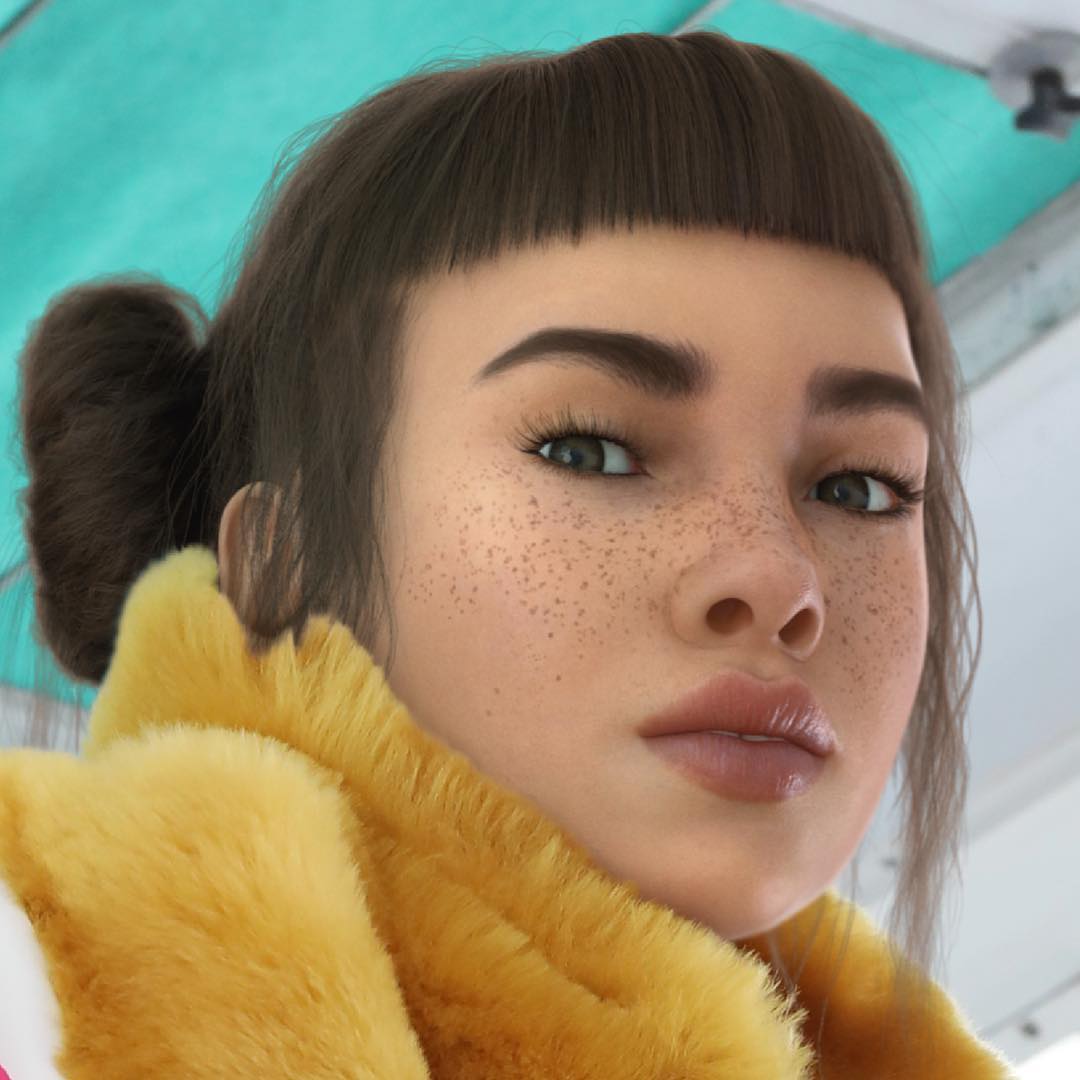
Lil Miquela is a Brazilian-American fashion influencer and music artist from Downey, California. With 3m Instagram organic followers and describes herself as a 19-year-old Robot living in LA.
She models clothes and supports socio-political causes (#BLM). She’s modelled for Prada, Chanel, Diesel and Moncler. She has released a Spotify top 10 track and launched her own clothing range.
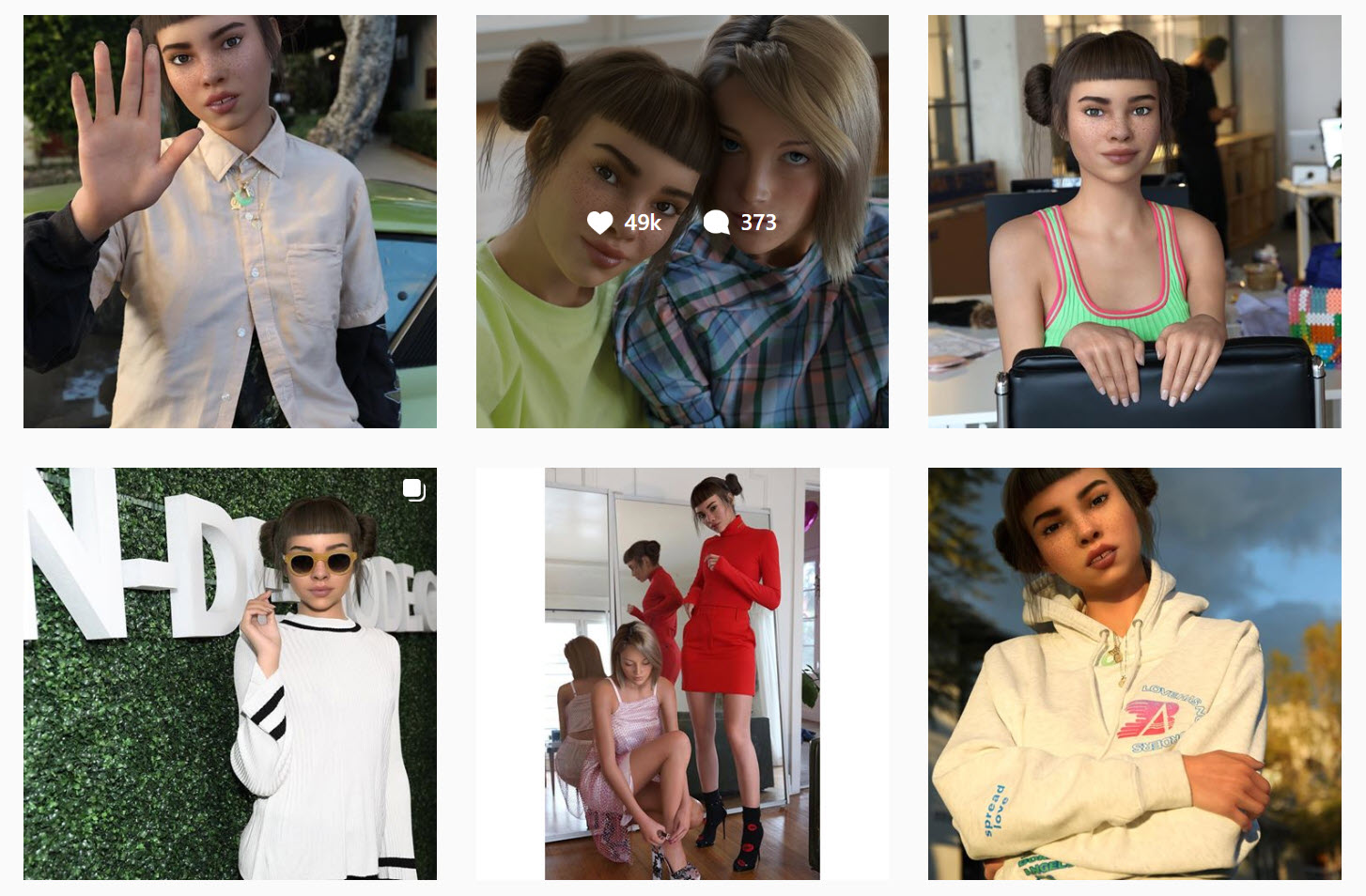
Montage of @LilMiquela
Lil Miquela has been on the front cover of Highsnobiety and King Kong. Like many other fashion Instagram influencers, Lil Miquela is in demand by brands that want to pay for access to her audience. But @lilmiquela is different. She doesn’t actually exist. Well, she does exists as ‘a 19-year-old Robot living in LA’. Perhaps we all engage with a ‘willing suspension of disbelief’ (as movie makers used to say).
View this post on Instagram
Lil is a computer-generated avatar influencer. Lil is a virtual influencer with a ‘conscience’. She supports social causes such as Black Lives Matter and supports an organisation called Black Girls Code, which promotes technology training for girls (supports these through her platform @lilmiquela ). Lil is one of a wave of new virtual influencers (others call them fake influencers) just like the very beautiful Shudu. Meet Shudu.gram
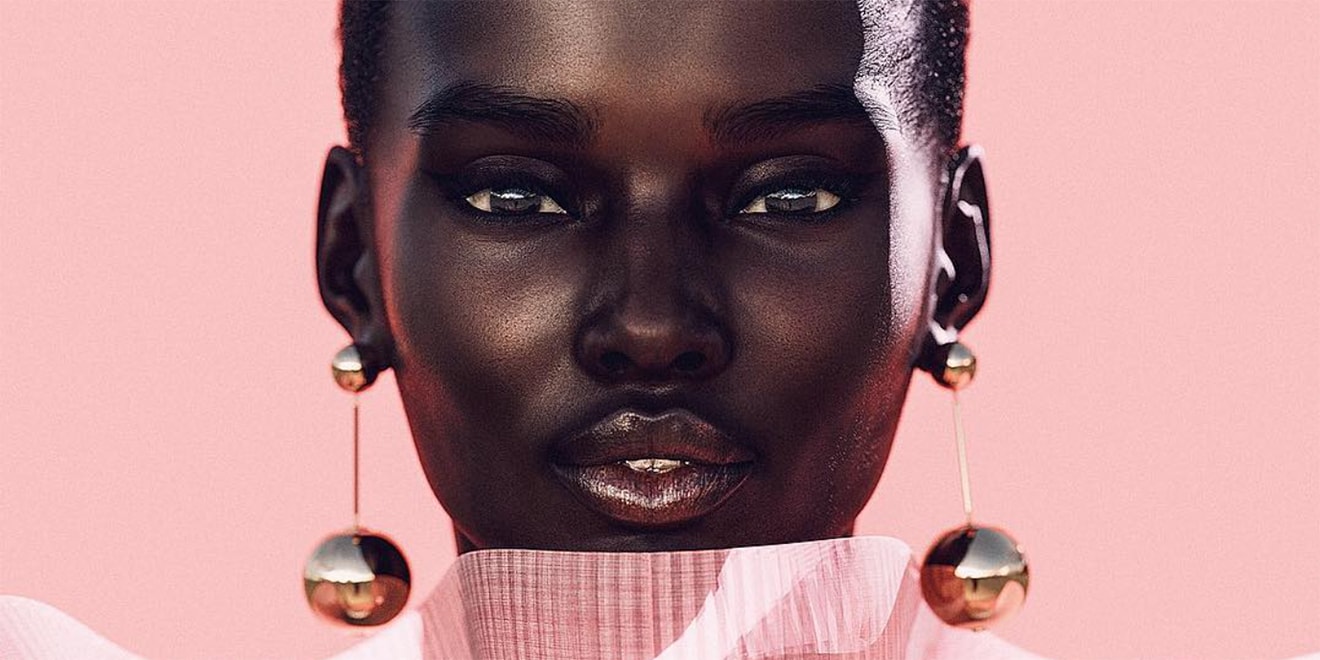
Shudu @Shudu.gramOnce
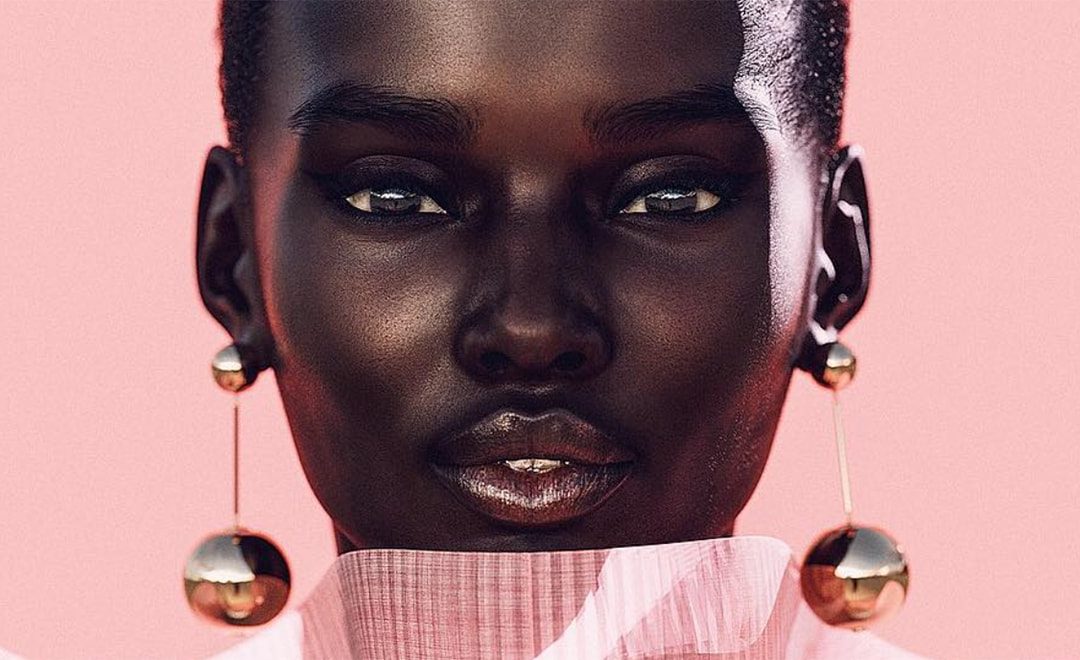
Shudu.gram appeared on Instagram in April 2018, she immediately attracted followers triggering an online global hunt for her identity. Like Lil, Shudu does not exist the ‘real world’ but she does exist in the digital world. Shudu is the computer-generated creation of British photographer Cameron-James Wilson who sees Shudu as an ‘art piece’ and as ‘a virtual celebration of beautiful dark-skinned women.’ Wilson felt moral-bound to tell the public that Shudu was not real. So Shudu ‘came out’ and declared she was not real. However, people still follow her. It seems people can still form relationships with avatars. Shudu’s Instagram page says: Shudu, The World’s First Digital Supermodel with an FAQ section that declares that she is not real.
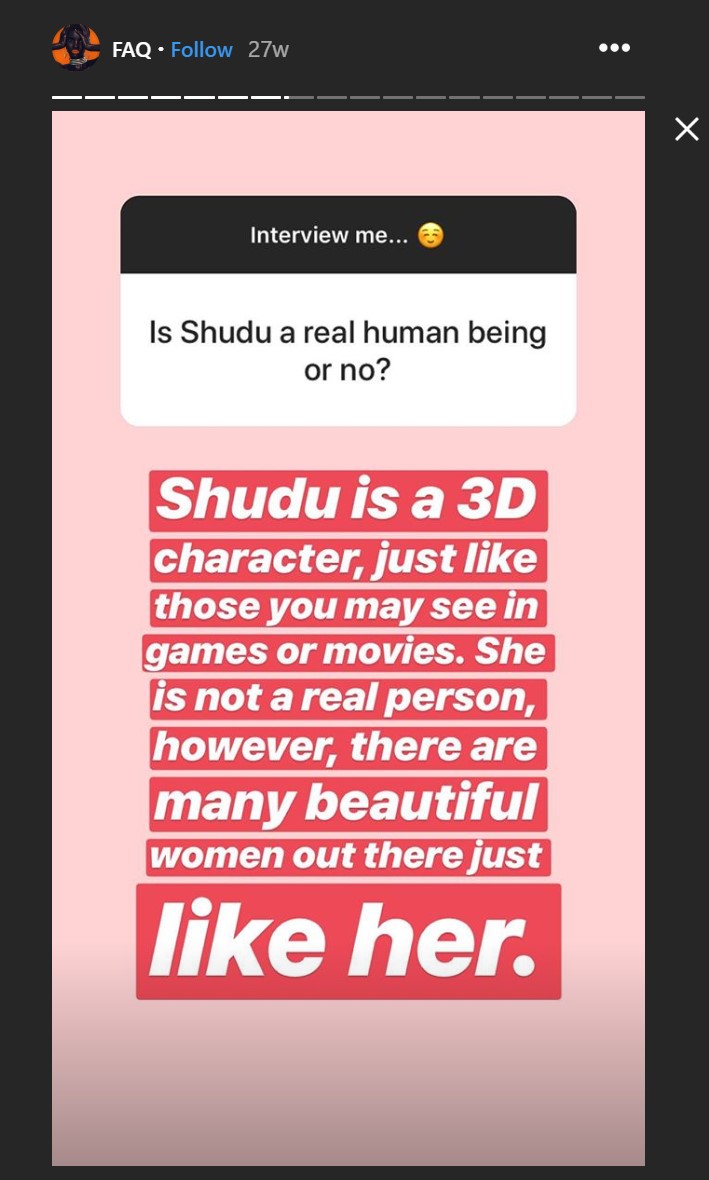
One of many FAQs on Shudu’s Instagram page confirming she is not real @Shudu.gram
Meanwhile @LilMiquela also has a relationship with her 1.5m followers strengthened, perhaps, by her stream of social consciousness as explained by Scott Guthrie: ‘Lil Miquela is more than a clothes horse. She shares stories of British schoolboys helping to avert a suicide attempt. She writes letters to US Congress in support of the transgender community and builds awareness among her followers of the 1.4 million transgender people living in the US. The URL in her Instagram bio links to Black Girls Code, a charity that aims to increase diversity in the digital space. Such elements are expertly curated to reflect what it means to be human: a set of values and ethics overlay the commercial imperative of brand sponsorship.’ (Guthrie 2018)
In an email interview with BBC, Lil was asked what she thought about virtual celebrities. This was her email reply:
“I think most of the celebrities in popular culture are virtual! It’s been disheartening to watch misinformation and memes warp our democracy, but I think that speaks to the power of ‘virtual’. Eventually, ‘virtual’ shapes our reality and I think that’s why I’m so passionate about using virtual spaces like Instagram to push for positive change.”
‘Artificial Influencers are proving to be a success and therefore are attracting the attention of brands’ (Kulp 2018B). You will probably see more virtual models in your Instagram feed as AI (Artificial Intelligence) transforms Influencer Marketing (Kulp 2018A). Perhaps these virtual influencers are just another form of the ancient ‘doll’ tapping into our ancient desires – not only as a children’s toy, not just a symbolic power in magical or religious rituals, but perhaps icons of excellence to the next generation?
View this post on Instagram
They’re digitally created. And to a lot of people, that doesn’t matter at all. To Lil Miquela’s creator, Brud, the LA-based start-up that specialises in ‘robotics, artificial intelligence and their applications to media businesses’ – it does matter, a lot. Artificial influencers can earn a lot of money – see Artifical Influencers Earn Big Bucks next week.
If you liked this you might also enjoy:
Chinese GirlBot With 465m Boyfriends
Here Come The Clever Bots – bursting with artificial intelligence?
Here Come The Really Clever Bots – where AI meets customer needs
Artificial Influencers Use My Magic Marketing Formula (IRD)
SOSTAC® Plan for developing your own ChatBot
Join me in Clubhouse in my club called SOSTAC® Plans any Friday 3.30pm – 4.00pm BST for a chat, Q&A, observations about SOSTAC(r) Plans and any other marketing related issues including AI Driven Bots.

I had no idea that AI had been used in this way. Your article is so insightful to how just how commercial AI has already become. Given that these virtual influencers were created a number of years ago already, this has really opened my eyes.
It demonstrates both the power that AI can yield over shaping opinion and influencing habits or actions as well as the scale of the opportunity to monetise the technology.
I find this exciting and staggering and this is only going to become more mainstream as the technology advanced and evolves further.
Yes Lee and these come from 5 years ago.
Have a look at this post ‘Will ChatGPT + ChatBots + Avatars Make Us Immortal?’ from last year. https://prsmith.org/2023/03/10/what-will-chatgpt3-chatbots-avatars-do-to-us/